How Martech Buying Decisions Are Changing as AI Tools Multiply
Atlanta small business owners, are you looking at marketing technology lately? It’s a fast-moving world. You probably feel it. The tools you use to reach customers, build brands, and drive sales are changing. A big reason is artificial intelligence. AI is no longer a futuristic idea. It’s here. It’s in the software you use every day. And it’s changing how you should think about buying new marketing tools.
The Old Way of Buying Martech
Think back a few years. Buying marketing technology, or martech, often meant looking at a few key things. You’d consider features. Does it do what you need? You’d look at price. Can your budget handle it? You’d check for integrations. Does it play nice with your existing systems? Maybe you’d ask for demos. You’d read reviews. It was a careful, often linear, process.
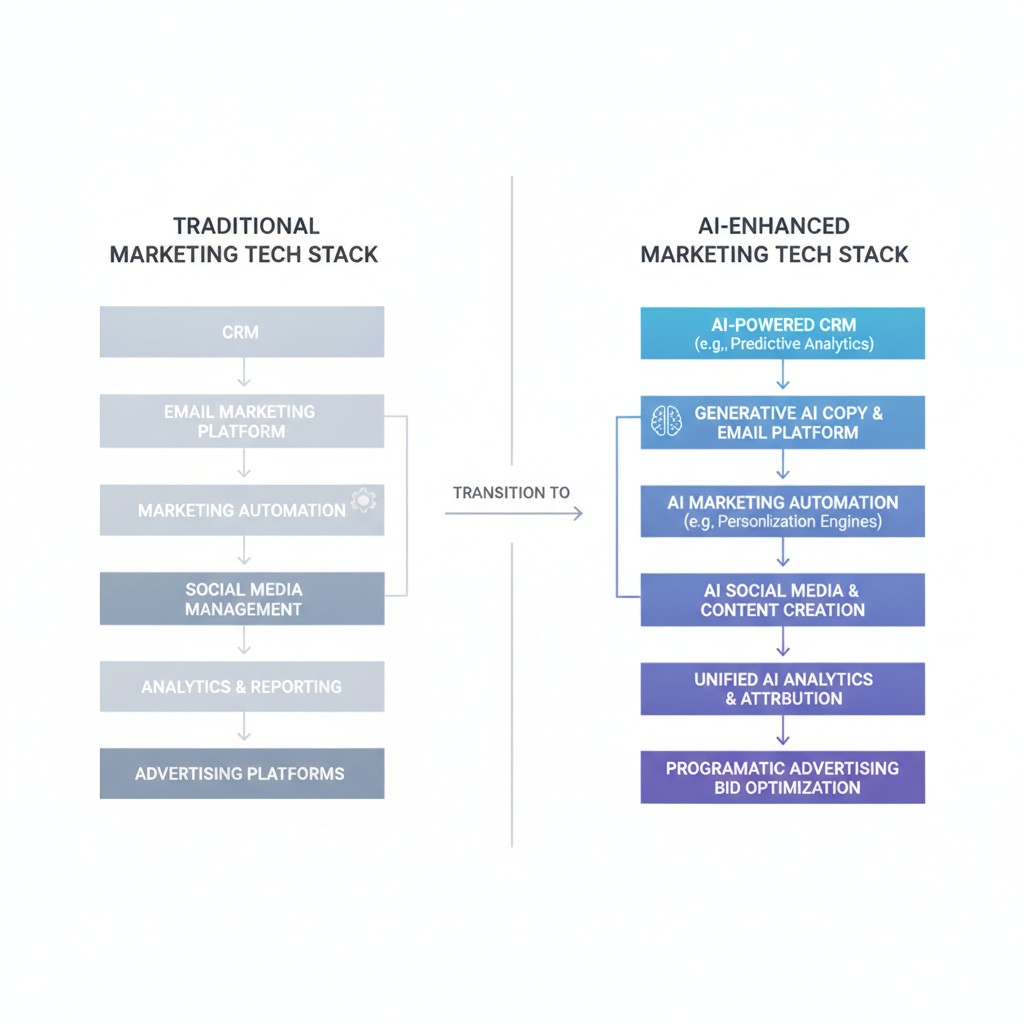
You might buy a CRM. Or an email marketing platform. Or social media management software. Each tool was often bought as a standalone solution. You’d piece together your marketing tech stack. This was like building with LEGO bricks. Each brick was important. You hoped they would all fit together eventually.
AI Changes Everything
Now, AI is shaking that up. It’s not just one new feature. AI is becoming the engine. It’s the intelligence behind many martech tools. This changes the game for your buying decisions.
AI-Powered Features You’re Seeing
- Content Creation: AI can write blog posts, social media updates, and ad copy.
- Personalization: It helps tailor messages to individual customers.
- Data Analysis: AI spots trends and insights in your customer data faster than ever.
- Automation: Routine tasks like scheduling posts or segmenting lists get smarter.
- Predictive Analytics: AI can help forecast what customers might do next.
These aren’t just add-ons anymore. They are core functionalities. They are built into the software. This means your checklist for buying martech needs an update.
What to Look for Now
When you’re evaluating new martech, ask different questions. The focus shifts.
Beyond Basic Features
Instead of just asking “Does it do X?”, ask “How does AI enhance X?” For example, if you’re looking at an email platform, don’t just ask if it sends emails. Ask if its AI can help you write better subject lines. Ask if it can predict the best time to send emails to each person on your list. Ask if it can segment your audience based on predicted behavior.
Data is Key to AI
AI tools need data to work. This means you need to think about your data strategy. Does the martech tool you’re considering integrate well with your existing data sources? Can it access the data it needs to provide valuable AI insights? If a tool promises AI-driven personalization, but can’t easily connect to your customer database, its AI power is limited for you.
Ease of Use and Learning Curve
AI can sound complex. But good AI tools should make things easier, not harder. Look for tools where the AI is intuitive. You shouldn’t need a data scientist to use it. The AI should work in the background, providing smart suggestions or automating tasks without you needing to be an expert. Think about how much training your team will need.
Integration and the Smart Stack
The idea of a martech stack is still relevant. But now, you’re building a *smart* stack. You want tools that not only connect but also share intelligence. If your AI-powered CRM can feed insights to your AI-powered email tool, that’s a powerful combination. You’re looking for tools that work together intelligently, not just functionally.
Ethical AI and Trust
As AI becomes more powerful, trust is crucial. How does the vendor handle data privacy? Are their AI models transparent, or are they a black box? For Atlanta businesses serving local communities, maintaining trust with your customers is paramount. Ensure the AI tools you adopt align with your ethical standards and your brand’s values.
The Future of Martech Buying
Buying martech is becoming less about picking discrete tools and more about choosing intelligent partners. You’re looking for platforms that can learn and adapt. You want solutions that can provide proactive insights. The vendors who offer truly integrated AI capabilities will likely stand out.
For you, the small business owner, this means staying curious. Keep an eye on how AI is evolving within the martech landscape. Don’t be afraid to ask vendors tough questions about their AI. Understand what their AI can *really* do for your business. The right AI-enhanced martech can be a significant advantage for your Atlanta business.
Ready to put your Metro Atlanta business on autopilot?
Growth Engine OS handles missed calls, follow-up, and reviews — automatically.
See Growth Engine OS