The Beam Engine
You might not think about steam engines much these days. We have electric motors. We have internal combustion engines. But the beam engine? It’s a foundational piece of our industrial past. And its principles still echo in how we do business today.
What Exactly Was a Beam Engine?
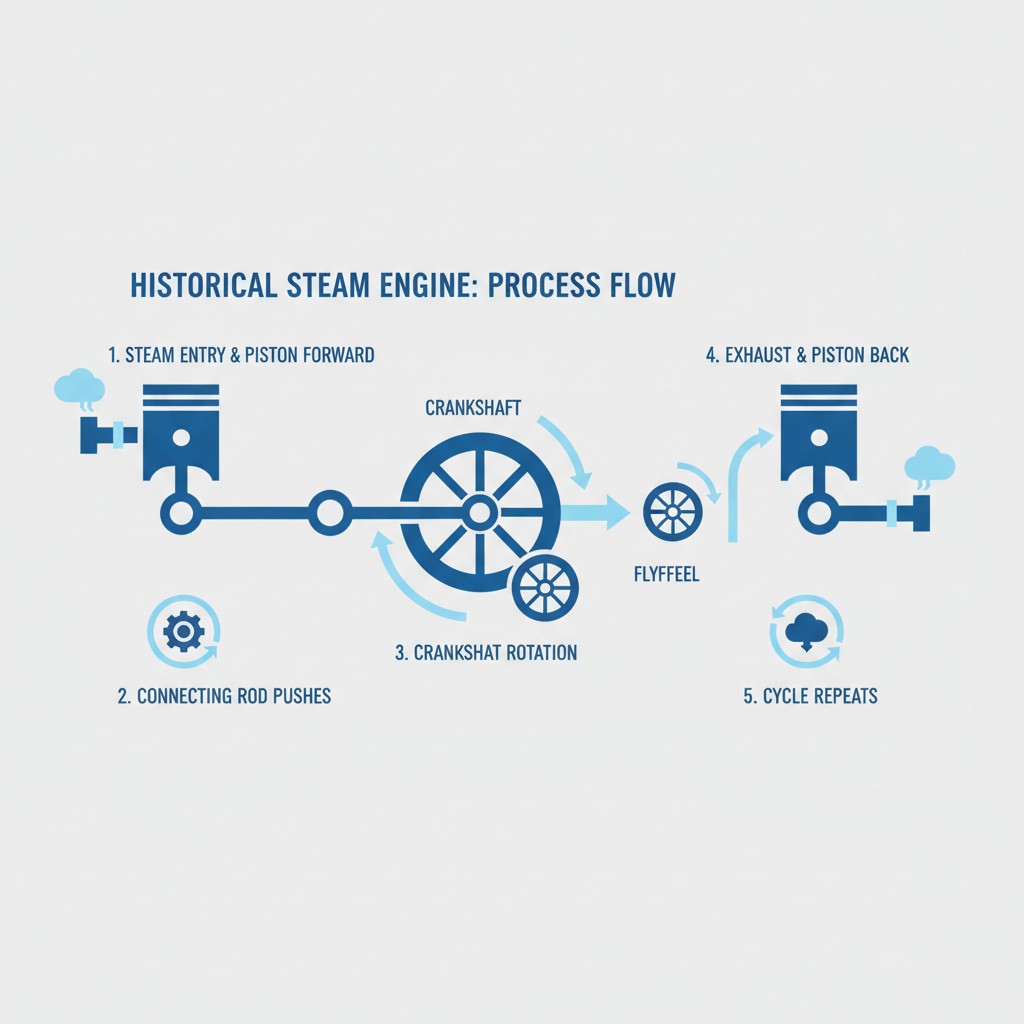
Imagine a giant seesaw. That's a good way to picture the core of a beam engine. A large, overhead lever – the beam – pivots. One end is connected to a piston. This piston moves up and down inside a cylinder. Steam power pushes the piston. This makes the beam rock back and forth.
The other end of the beam is connected to a mechanism. This could be a pump rod. It could be a flywheel and crankshaft. The rocking motion of the beam turns that mechanism. It's a clever way to convert linear motion (up and down) into rotary motion (spinning).
Why Was It So Important?
Before the beam engine, power was limited. Water wheels and windmills were common. But they depended on natural forces. You had to be near a river. You needed consistent wind. The beam engine changed that. It brought reliable, controllable power almost anywhere.
Think about the Industrial Revolution. Factories needed power. Mines needed to pump out water. Ships needed to move. The beam engine made all of this possible. It was the workhorse of its era.
Early Applications in Atlanta's Backyard
While Atlanta wasn't a major industrial hub in the early days of steam, the principles of these engines were crucial. Consider the need for pumping water. Early Atlanta, like many growing cities, would have faced challenges with water supply and sanitation. Beam engines were the primary technology for large-scale water pumping. They allowed cities to grow beyond the limits of gravity-fed systems or manual labor.
Mining operations also relied heavily on them. Georgia has a history of mining, particularly for gold and later for other minerals. Pumping water out of shafts was essential. A flooded mine is a useless mine. Beam engines provided the brute force needed to keep these operations going.
Railroads, a massive driver of Atlanta's growth, were powered by steam engines. While not all were beam engines, the development of steam power technology, pioneered by engines like the beam engine, directly led to the locomotives that would connect Atlanta to the nation.
From Steam to Modern Machinery
So, how does a 200-year-old engine relate to your business today? It’s about the fundamental engineering principles.
- Energy Conversion: The beam engine converted one form of energy (steam pressure) into mechanical work. Your business does this constantly. You convert marketing efforts into sales. You convert raw materials into finished products. You convert employee time into services.
- Efficiency and Optimization: Early engineers constantly worked to make beam engines more efficient. They reduced steam consumption. They improved the seals. They refined the mechanics. This drive for efficiency is something every small business owner understands. You look for ways to do more with less. You streamline processes. You cut waste.
- Reliability: A breakdown in a factory or mine could halt production for days. Beam engines needed to be robust and reliable. Your business needs reliable systems too. Reliable suppliers. Reliable equipment. Reliable employees.
- Foundation for Innovation: The beam engine wasn't the end. It was a beginning. It paved the way for more advanced steam engines. Those, in turn, led to electric motors and other power sources. Innovation builds on what came before. Your business might be using the latest tech, but that tech stands on the shoulders of giants, including early engine designers.
The Legacy in Metro Atlanta
When you look at the infrastructure around Metro Atlanta, you see the legacy. Water treatment plants still rely on powerful pumps. Manufacturing facilities, even those using electric power, operate on principles of mechanical force and efficiency honed over centuries. The logistics networks that move goods in and out of Atlanta depend on reliable power and efficient machinery.
Even the concept of a central power source driving multiple operations has parallels. Think of your business's IT infrastructure, or a central supply chain hub. The core idea of generating and distributing power effectively is timeless.
The beam engine represents a pivotal moment. It was about harnessing power in a new way. It allowed for unprecedented growth and production. It taught us invaluable lessons about engineering, efficiency, and the relentless pursuit of progress. These lessons remain as relevant for a small business owner in Atlanta today as they were for an industrialist in the 1800s.
Ready to put your Metro Atlanta business on autopilot?
Growth Engine OS handles missed calls, follow-up, and reviews — automatically.
See Growth Engine OS