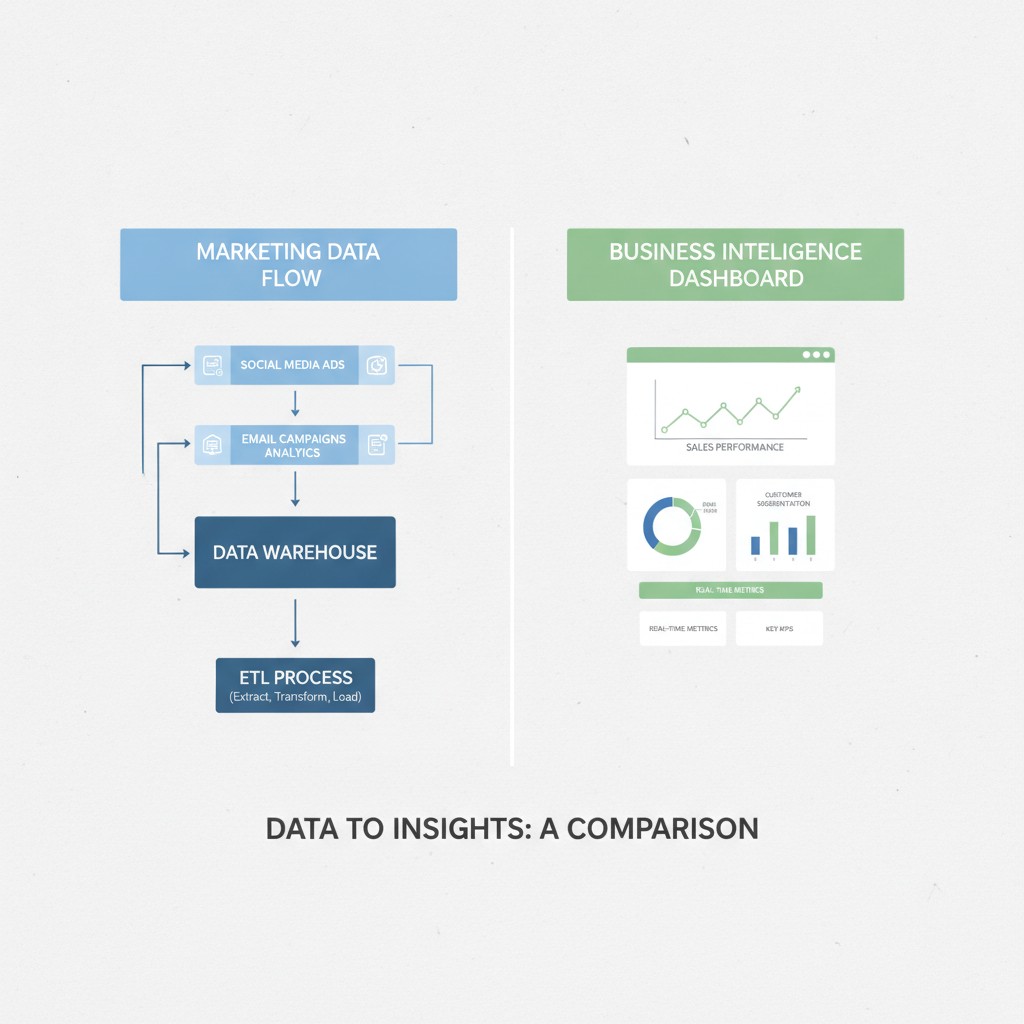
The Difference Between Marketing Data and Business Intelligence
Running a business in Metro Atlanta takes grit. You work hard. You know your customers. But are you using your information effectively? Let's talk about marketing data and business intelligence. They sound similar. They are not. Knowing the difference helps you make better choices for your business.
What is Marketing Data?
Marketing data is raw information. It comes from your marketing efforts. Think about your website. How many people visit? Where do they come from? What pages do they look at? That's marketing data.
Your social media gives you data too. Likes. Shares. Comments. Follower growth. These numbers tell a story. Your email campaigns generate data. Open rates. Click-through rates. Unsubscribe rates. All of this is marketing data.
Advertising campaigns create data. How many people saw your ad? How many clicked? How much did it cost? This is also marketing data.
Essentially, marketing data is the collection of facts and figures related to your promotional activities. It's the 'what' and 'when' of your marketing.
Examples of Marketing Data
- Website traffic sources (e.g., Google, social media, direct)
- Social media engagement metrics (likes, shares, comments)
- Email open and click-through rates
- Advertising impressions and click-through rates
- Conversion rates from specific campaigns
- Customer demographics from surveys
- Search engine rankings for keywords
What is Business Intelligence?
Business intelligence, or BI, is bigger than just marketing. It takes that raw marketing data. It mixes it with other business information. Then it turns it into insights. Insights help you understand the 'why' and 'what next'.
BI looks at the whole picture. It connects marketing data to sales data. It connects it to operational data. It connects it to financial data.
Imagine your marketing data shows many website visits. That's good. But BI asks: Are those visits turning into sales? If not, why? Is your product priced wrong? Is your sales process broken? Is the traffic not the right kind of traffic?
BI uses tools. These tools help you see trends. They help you spot patterns. They can even predict future outcomes. It's about making informed decisions. It's about strategy.
Examples of Business Intelligence
- Analyzing which marketing channels bring in the most profitable customers.
- Identifying customer segments that are most likely to purchase.
- Forecasting sales based on past marketing campaign performance and market trends.
- Understanding the return on investment (ROI) for different marketing activities.
- Pinpointing bottlenecks in the sales funnel.
- Detecting shifts in customer behavior that impact sales.
- Assessing the overall health and profitability of the business.
How They Work Together
Marketing data is the fuel. Business intelligence is the engine. You can't have BI without data. But data alone doesn't give you the full picture.
Your marketing efforts create valuable data. You collect it. You analyze it. You see what's working. This is the first step.
Then, you bring in other data. Sales figures. Customer feedback. Inventory levels. Operational costs. BI combines all of this.
It helps you answer big questions. Which marketing campaigns are most effective at driving actual revenue? Are we reaching the right audience for our products or services? How can we improve customer retention?
For example, your marketing data might show high engagement on a new social media ad. BI would then look at sales figures associated with that ad. Did it lead to purchases? What was the profit margin on those sales? This tells you if the marketing effort was truly successful, not just in clicks, but in business impact.
Why This Matters for Your Atlanta Business
As a small business owner in Atlanta, your time and resources are precious. You need to focus on what drives results.
Marketing data tells you what's happening. It's a report card for your campaigns. It shows you what you're doing right and what needs improvement.
Business intelligence takes that report card. It puts it into context. It shows you how your marketing affects your bottom line. It helps you see the bigger financial picture.
By understanding BI, you can stop wasting money on ineffective marketing. You can invest more in strategies that actually grow your business. You can understand your customers better. You can anticipate market changes.
It's about moving from simply collecting numbers to truly understanding your business's performance. It's about making smarter, data-driven decisions that lead to sustainable growth.
The Journey from Data to Insight
Think of it as a process. First, you gather your marketing data. You organize it. Then, you integrate it with other business data. You use tools to analyze it. You look for trends and patterns. Finally, you gain insights. These insights guide your actions. They help you steer your business in the right direction.
This journey is crucial for any business aiming for success in today's competitive landscape. It’s how you turn raw information into a strategic advantage.
Ready to put your Metro Atlanta business on autopilot?
Growth Engine OS handles missed calls, follow-up, and reviews — automatically.
See Growth Engine OS