The AI Content Gold Rush
Artificial intelligence. It's everywhere. Especially in marketing. You've probably seen it. AI can write articles. It can create social media posts. It can even draft emails.
Many businesses are jumping on board. They want to create a lot of content. Fast. This is what we call 'AI-generated content at scale.' It sounds great. More content means more visibility, right?
But many marketing teams are making a big mistake. They're not thinking it through. They're missing the point of good marketing.
Mistake 1: Treating AI Like a Magic Wand
You can't just tell an AI to 'write a blog post' and expect perfection. AI tools are powerful. But they are not magic wands. They need guidance. They need context.
Think about it like this. If you hire a writer, you don't just say, 'Write something.' You give them a brief. You tell them who the audience is. You explain the goal of the piece. You provide key information.
AI is the same. You need to give it clear instructions. You need to define the purpose. You need to specify the tone. You need to offer factual input. Without this, the AI will give you generic output. It might even be inaccurate.
Mistake 2: Forgetting the Human Touch
AI is good at generating text. It's not good at understanding nuance. It doesn't have real-world experience. It can't tell a compelling story based on emotion.
Your customers are people. They respond to authenticity. They connect with genuine voices. AI-generated content, if not edited, can sound robotic. It can feel impersonal. It might even alienate your audience.
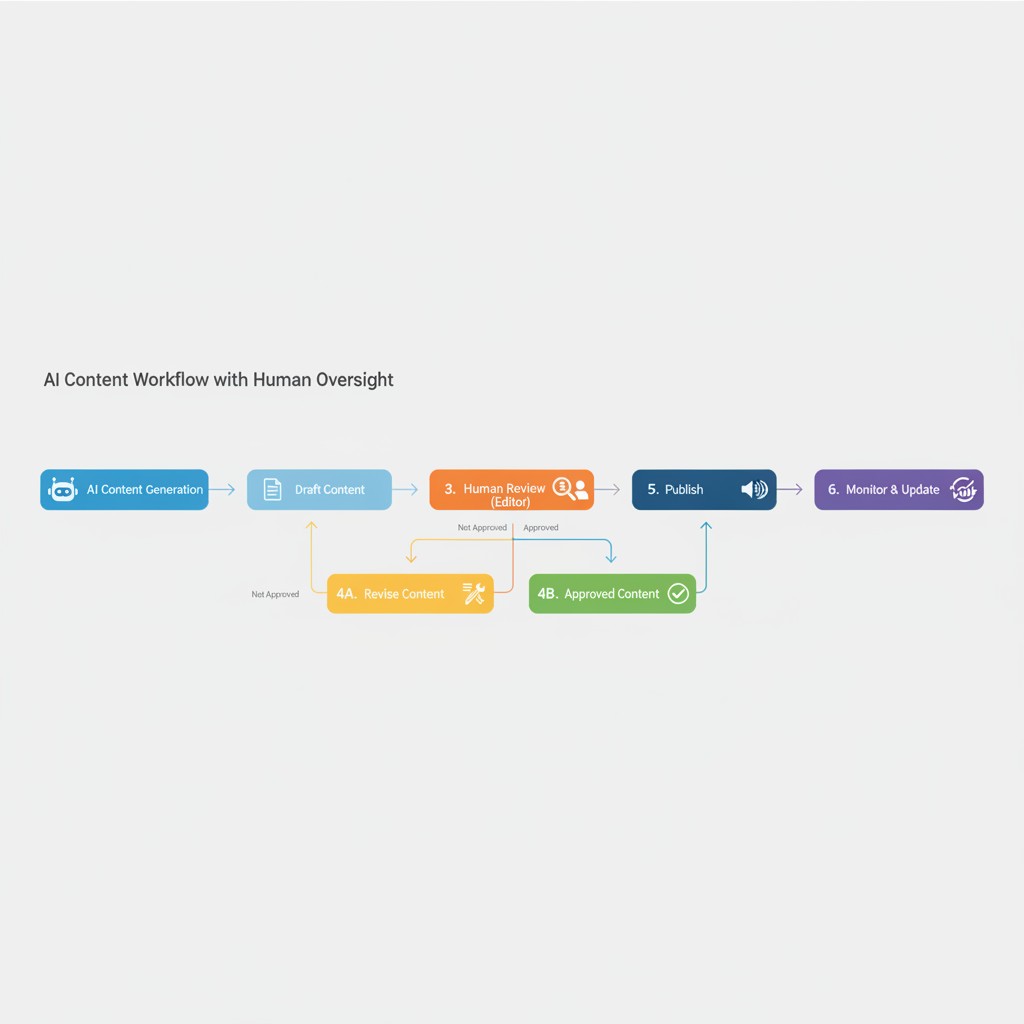
This is where human oversight is crucial. You need a human to review AI content. They need to fact-check it. They need to refine the language. They need to add personality. They need to ensure it aligns with your brand's voice. This human touch is what makes content resonate.
Mistake 3: Ignoring SEO Fundamentals
AI can churn out a lot of words. But are those words optimized for search engines? Not necessarily. AI doesn't inherently understand keyword strategy. It doesn't know user intent like a seasoned SEO professional.
You still need to do your keyword research. You still need to understand what your audience is searching for. You need to guide the AI to incorporate those keywords naturally. You also need to ensure the content structure is search-engine friendly.
Simply creating hundreds of AI articles won't guarantee rankings. Search engines are smart. They look for quality, relevance, and user engagement. AI content needs to be shaped to meet these standards.
Mistake 4: Scaling Without Strategy
The allure of 'at scale' is powerful. More content, more reach. But what if that content isn't good? What if it's irrelevant? What if it harms your brand's reputation?
Scaling AI content without a clear strategy is a recipe for disaster. You need to define your content goals. What are you trying to achieve? Brand awareness? Lead generation? Customer education?
Each piece of content should serve a purpose. AI can help you produce content faster. But you still need to plan which content to produce. You need to identify the topics that matter to your audience. You need to map content to different stages of the customer journey.
Mistake 5: Not Understanding AI's Limitations
AI is trained on existing data. This means it can sometimes perpetuate biases. It can also generate information that is outdated or simply wrong. It doesn't 'know' things in the way a human does.
It's a tool, not a replacement for expertise. If you're writing about a technical subject, your AI might not have the deep knowledge required. It might miss crucial details. It might misunderstand complex concepts.
Your team's expertise is still your biggest asset. AI should augment that expertise. It should free up your team to focus on higher-level tasks. It should not be relied upon to be the sole source of truth or creativity.
The Right Way to Use AI for Content
So, how do you get it right? It's about a balanced approach. Think of AI as a powerful assistant.
- Provide clear prompts: Be specific about your topic, audience, tone, and goals.
- Fact-check rigorously: Never publish AI-generated content without verifying its accuracy.
- Edit for voice and style: Inject your brand's personality and ensure it sounds human.
- Integrate SEO best practices: Guide the AI to use keywords and structure content effectively.
- Focus on value: Ensure the content truly helps or informs your audience.
- Human oversight is key: Always have a human in the loop for review and refinement.
AI can be an incredible asset for small businesses in Atlanta. It can help you compete. It can help you reach more customers. But only if you use it wisely. Don't fall into the trap of mass-producing low-quality content. Focus on quality, authenticity, and strategic value. That's how you truly win with AI.
Ready to put your Metro Atlanta business on autopilot?
Growth Engine OS handles missed calls, follow-up, and reviews — automatically.
See Growth Engine OS